
Table of Contents
- Why Some T-Shirts Outlast Others by Years
- How to Tell If a T-Shirt Is High Quality Before You Buy
- How Long Does a Cotton T-Shirt Last?
- How to Wash T-Shirts Without Fading
- How to Stop T-Shirt Graphics From Fading
- The Wash-and-Dry Routine That Adds Years to a T-Shirt
- Repair, Stain Treatment, and When to Replace a Shirt
- Frequently Asked Questions
Last Updated: October 21, 2026
Why Some T-Shirts Outlast Others by Years
A 2026 study in ScienceDirect tracked T-shirt service life and found that an informal-use shirt is kept for an average of four years, worn 33 times, and washed 18 times. A formal-use shirt hangs on for five years. Same category of garment, wildly different outcomes.
So what makes a t-shirt last longer? It comes down to three things: how the shirt is built, how you wash it, and how you store it. Most people only control the last two, and they still throw away years of wear.
At NEVERBASIC CLOTHING CO, we sell graphic tees, so we have a stake in this. We also know the frustrating part: a shirt that pills after two months usually had a weak starting point.
Below, we break down the seven care rules that actually work, plus how to spot a durable shirt before you spend a dollar on it.
How to Tell If a T-Shirt Is High Quality Before You Buy
Check the fabric weight, the seams, and the collar first. A quality T-shirt is a garment built with enough fabric density and reinforced stitching to survive repeated washing without losing shape.
Here is what to inspect in the fitting room or on the product page:
- Fabric weight: Look for 6 oz./yd.² or heavier. Lightweight 4 oz. shirts thin out fast.
- Stitching: Double-needle seams on the neck, sleeves, and hem hold up better.
- Collar: A ribbed, stretch-proof collar resists the dreaded "bacon neck."
- Fiber content: WRAP's research found that harder-wearing shirts tend to include some synthetic fibers like polyester or polyamide.
- Construction: Taped neck and shoulders add structure and reduce stretching.
Heavier fabric and better construction show higher resilience, according to research summarized by Texintel's durability analysis. That matches what we see: our 7.5 oz. heavyweight tee outlasts thin blanks by a wide margin.
How Long Does a Cotton T-Shirt Last?
A cotton T-shirt lasts about four to five years with regular wear and proper care. The 2026 ScienceDirect lifespan study puts informal-use shirts at four years on average. Cotton Incorporated's 2026 Durability Survey reports consumers wear clothing for almost five years before calling it worn out.
Those numbers assume decent care. A shirt washed in hot water and tumble-dried on high can fade and shrink well before year two.
Cotton is durable on its own. The weak points are heat, harsh detergent, and friction from the dryer. Control those and a good cotton tee earns its full lifespan.

How to Wash T-Shirts Without Fading
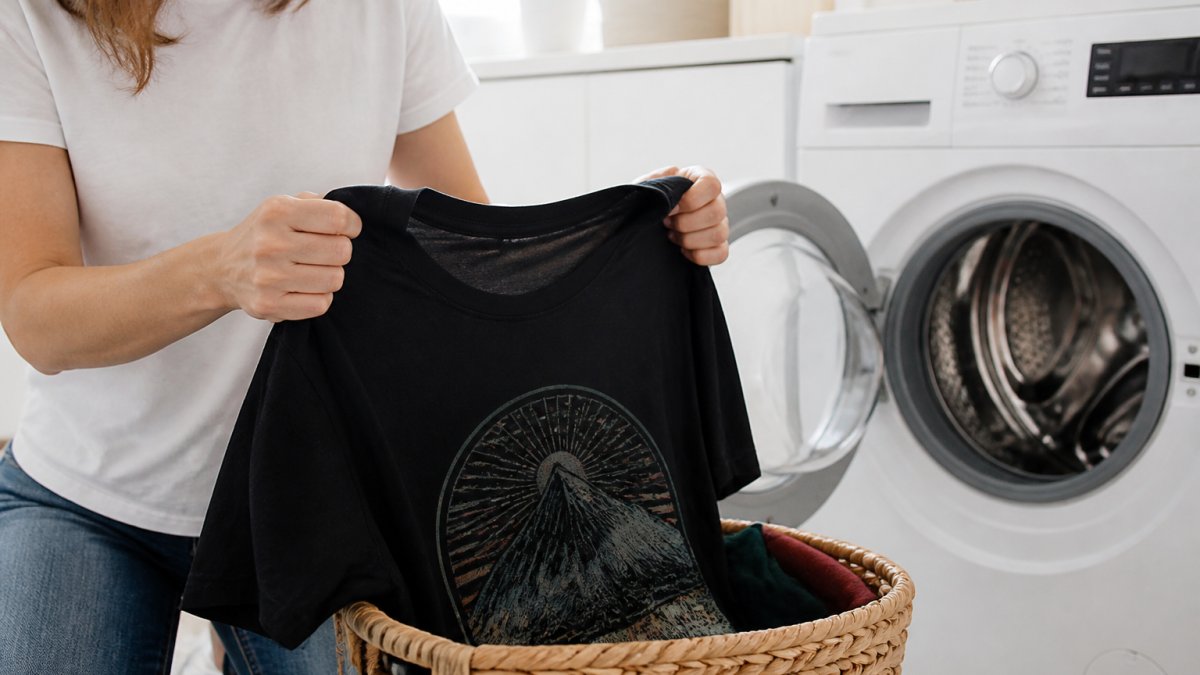
Wash T-shirts inside out in cold water on a gentle cycle with mild detergent. That combination protects color and print better than any single step on its own.
Follow this order:
- Turn the shirt inside out. This puts friction on the inside, not the print or face of the fabric.
- Use cold water. Cold water helps protect printed ink and color, per care guidance from VSTees' cotton care guide.
- Pick a gentle cycle. Less agitation means less pilling and fewer stretched fibers.
- Add mild detergent only. Extra detergent leaves residue that dulls color.
- Skip bleach and harsh chemicals. They break down cotton fibers and strip dye.
- Wash less often. Spot-clean between wears when you can.
How to Stop T-Shirt Graphics From Fading
Turn graphic tees inside out, wash cold, and never iron directly on the print. Heat is the number one enemy of screen-printed and garment-dyed designs. But not all graphics fail the same way, and treating a plastisol screen print like a heat transfer or a garment-dyed tee is how people accidentally ruin them.
Here is how the main decoration types break down and what each one needs:
XXX Tentacion "Revenge" Graphic Tee →
- Plastisol screen prints sit on top of the fabric as a cured ink layer. They crack when the ink flexes repeatedly under heat, so the dryer is the main threat. Wash inside out, skip fabric softener (it coats the ink and dulls it), and air-dry or use the lowest heat setting. Never iron directly on the print; if you must press the shirt, turn it inside out and use a pressing cloth.
- Heat transfers and vinyl prints are adhered with adhesive that softens with heat. They peel at the edges first. Avoid high dryer heat entirely, and never stack a transfer-printed shirt under heavy items in storage, which can crease and lift the edges.
- Garment-dyed and pigment-dyed tees are dyed before construction, so the color lives in the fibers rather than on top. They fade gradually and intentionally. The risk is uneven fading from concentrated detergent or direct sun, so wash them separately from light colors for the first few cycles and dry them in shade.
- Water-based and discharge prints soak into the fabric and feel soft to the touch. They are the most wash-tolerant but can dull if washed with harsh detergent or bleach alternatives.
A few more rules that protect graphics across all types:
- Air-dry when possible. If you must use a dryer, choose low heat and remove the shirt while slightly damp.
- Wash graphics separately from items with zippers or hooks that snag the print surface.
- Hang or fold flat. Never wring a printed shirt, which stretches the ink layer and the knit together.
Our garment-dyed heavyweight cotton tee uses a dye process that gives it a broken-in look from day one, so any natural fading blends into the design instead of ruining it. That is the difference between a print that ages and a print that fails.
The Wash-and-Dry Routine That Adds Years to a T-Shirt
A simple weekly routine beats any single product. Here is the schedule we suggest, with the settings and amounts that actually matter:
| Step | Action | Frequency |
|---|---|---|
| Wear | Air out between wears | 2-3 wears per wash |
| Wash | Cold, gentle, inside out | Weekly or as needed |
| Dry | Air-dry or low heat | Every wash |
| Store | Fold in a cool, dry place | Daily |
| Check | Inspect seams and collar | Monthly |
Now the specifics behind each row, because "cold and gentle" only works if you set it up right:
- Load size: Wash T-shirts in a medium load, no more than three-quarters full. An overloaded drum increases friction and leaves detergent residue; an underloaded drum lets shirts agitate against the metal. Both shorten life.
- Water temperature: Set the machine to cold (typically 60-80°F). Cold water helps prevent shrinkage and protects dye, and it is the single easiest habit to keep.
- Cycle: Choose the gentle or delicate cycle with a low spin speed. High spin extracts more water but stresses seams and stretches knits.
- Detergent amount: Use the minimum dose on the label for your load size and water hardness, usually about 2 tablespoons of liquid detergent for a medium load. Extra detergent leaves residue that dulls color and traps odor.
- Drying choice: Air-dry on a line or rack when you can. If you use a dryer, select low heat and remove shirts while slightly damp, then hang to finish. High heat is the main cause of shrinkage and print cracking.
Air drying extends clothing life, and cold water helps prevent shrinkage, according to care guidance from The Girl in the Ocean's clothing care tips. Those two habits alone do most of the work.
Store shirts folded in a dry place. Damp storage invites mildew and weakens fibers. A simple monthly check of seams and collar shape tells you whether the routine is holding up before small problems become replacements.
Repair, Stain Treatment, and When to Replace a Shirt
Treat stains fast, repair small holes early, and replace a shirt when the fabric thins or seams keep failing. Most "ruined" shirts are salvageable with quick action.
Stain and repair basics:
- Blot, don't rub. Rubbing pushes stains deeper into the knit.
- Cold water first. Hot water sets protein stains like sweat and blood.
- Patch small holes from the inside with a matching fabric scrap.
- Reinforce loose seams with a quick stitch before they split.
Replace the shirt when the fabric feels thin across the back, when the collar won't hold shape, or when repairs outnumber wears. A durable tee like our Travis Hunter Rookie Graphic Tee, built from preshrunk 6.1 oz. cotton, is designed to delay that day.

Frequently Asked Questions
What is the average lifespan of a t-shirt?
A 2026 study in ScienceDirect found that an informal-use t-shirt is kept for about four years, worn 33 times, and washed 18 times, while a formal-use shirt is kept for five years. Cotton Incorporated's 2026 U.S. Durability Survey puts clothing overall at almost five years of regular wear. Fabric weight, construction, and how you wash and dry a shirt all shift that number, so treat these as benchmarks rather than fixed limits.
Does washing a t-shirt in cold water make it last longer?
Cold water helps in two ways: it limits shrinkage and slows color loss, which is why care guides from VSTees and Libis Clothing recommend it for printed and cotton shirts. Heat is the main enemy of both cotton fibers and printed ink. Wash on a cold or cool setting with a gentle cycle, use a mild detergent, and skip the dryer or use low heat. That combination does more for how to wash T-shirts without fading than any single product.
What fabric makes a t-shirt last longer?
WRAP's research found that more hard-wearing t-shirts tend to include some synthetic fibers such as polyester or polyamide, and Texintel summarizes research linking heavier fabric and better construction to higher resilience. Price alone is not a reliable indicator. In practice, look at fabric weight (6 oz./yd.² and up is a solid starting point), reinforced seams, and a stable collar. A heavyweight cotton tee with double-needle stitching will usually outlast a thin, loosely knit one.
How often should you wash a t-shirt?
Wash a t-shirt when it actually needs it, not after every single wear. The 2026 ScienceDirect study recorded 18 washes across a four-year informal-use lifespan, a far lower frequency than most people assume. Air a shirt out between wears, spot-treat small stains right away, and wash when it smells or shows visible soil. Fewer wash cycles mean less agitation, less fading, and less wear on the seams and print.
Most shirts don't die from age. They die from hot water, high heat, and weak construction.
That is the whole game. Buy shirts built with real fabric weight and reinforced seams, then wash them cold and dry them low. At NEVERBASIC CLOTHING CO, every piece is made to work better and last longer, from our heavyweight cotton tees to our graphic designs. Choose a shirt that earns its years, and get more wear out of every wash.