
Table of Contents
- Why T-Shirt Collars and Necklines Stretch in the First Place
- How to Fix a Stretched T-Shirt Collar With Hot Water
- How to Shrink a Stretched T-Shirt Without Ruining the Print
- Fabric-by-Fabric Instructions: Cotton, Polyester, and Blends
- No-Sew Repairs and Fixes for the Waist, Hem, Sleeves, and Body
- How to Fix a Curling Shirt Collar
- How to Prevent T-Shirts From Stretching in the Wash and Dryer
- How to Tell If Your Shirt Has Actually Recovered
- Frequently Asked Questions
Last Updated: October 19, 2026
Why T-Shirt Collars and Necklines Stretch in the First Place
Stretched out t-shirts are the most common casualty of normal wear, and it almost always starts with three culprits: heat, tension, and wet fabric.
Cotton and cotton-blend knits are made of loops. Pull those loops repeatedly and they stay open.
The biggest offenders:
- Pulling the shirt over your head by the collar instead of the hem
- Hot water and high heat in the washer and dryer, which relaxes the knit
- Hanging a wet tee on a hanger, so gravity does the stretching for you
Ribbed collars resist this better than plain ones. The extra ribbing acts like a spring.
The good news: most stretched collars and necklines can be brought back.
How to Fix a Stretched T-Shirt Collar With Hot Water
Hot water is the most reliable at-home fix for a stretched collar. Heat relaxes the knit fibers, and as the fabric cools and dries flat, the collar tightens back toward its original size. The process takes about 30 minutes.
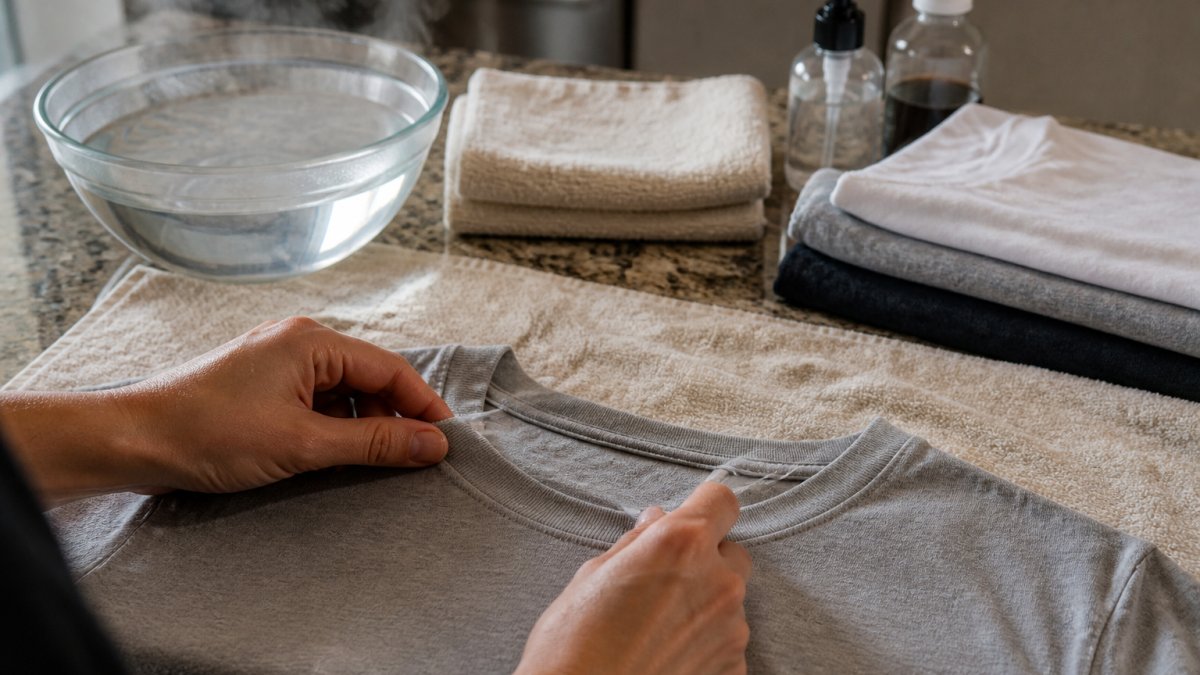
Here's the step-by-step:
- Fill a bowl with hot water, hot enough that you can still touch it comfortably
- Submerge only the collar and neckline, not the whole shirt
- Let it soak for 5 to 10 minutes
- Lift the shirt out and gently press out water, do not wring
- Lay the collar flat and reshape it with your fingers
- Let it air-dry flat, away from direct sun
Recommended Water Temperature and Soak Time
Use water below 60°C (140°F). Anything hotter risks shrinking the whole shirt unevenly or fading the print. If you can hold your hand in the water for a few seconds without pulling away, it's in the right range.
Soak for 5 to 10 minutes. Shorter soaks do little. Longer soaks start to loosen the rest of the shirt body.
Reshaping the Collar While Damp and Drying It Flat
This is the step most people rush. While the collar is still damp, lay it on a clean towel and press the ribbing back into a neat circle with your fingers.
Then dry it flat. Never hang a damp tee by the shoulders or toss it in the dryer on high heat. Lay it on a fresh towel in a well-ventilated spot and let it air-dry completely.
How to Shrink a Stretched T-Shirt Without Ruining the Print
The trick to shrinking a stretched-out T-shirt is controlling where the heat goes: tighten the knit without cracking the graphic or fading the ink. That means targeted heat, not a full blast in the dryer.
Work in this order:
- Spot-treat first. Soak just the stretched area in warm water.
- Keep the print dry. Fold the shirt so the graphic stays out of the water.
- Use low heat if you must use the dryer. Medium at most, and pull it out while still slightly damp.
Removing Excess Water Without Twisting
Never wring or twist a wet tee. Twisting stretches the knit further and distorts the print.
Instead, lay the shirt flat on a dry towel, roll it up with the shirt inside, and press down gently. Repeat with a second towel if needed.
Fabric-by-Fabric Instructions: Cotton, Polyester, and Blends
Different fabrics respond to heat in very different ways. Treating a polyester tee like a cotton one is how shirts get ruined.
| Fabric | Hot Water Safe? | Best Method | Risk |
|---|---|---|---|
| 100% cotton | Yes, below 140°F | Hot water soak + air-dry flat | Shrinks unevenly if too hot |
| Polyester | No, warm only | Warm soak + low heat dry | Melts or warps at high heat |
| Cotton-poly blend | Yes, warm | Warm soak + reshape + air-dry | Moderate, handles heat well |
| Ribbed knit collar | Yes, warm | Targeted collar soak + flat dry | Over-stretching while wet |
Cotton is the most forgiving. It shrinks back well with hot water and flat drying. Just don't overdo the temperature.
Polyester is heat-sensitive: use warm water only and never a hot dryer, since polyester knits can warp permanently at high heat.
Blends sit in the middle. Warm water, gentle reshaping, and air-drying flat work best.
No-Sew Repairs and Fixes for the Waist, Hem, Sleeves, and Body
Most guides stop at the collar, but stretched out t-shirts usually have more than one problem area. The waistband, hem, sleeve openings, and body all relax over time, and each needs a slightly different approach because the knit direction and tension differ. Below are the no-sew methods that work, ranked by effort and risk.
Fixing a Stretched Waist or Hem
A stretched waist or hem usually comes from pulling the shirt down by the fabric or hanging it wet.
- Fill a basin with water below 140°F (60°C).
- Submerge only the stretched waist or hem, keeping the rest of the shirt dry.
- Soak for 5 to 10 minutes, then press out water against the side of the basin, never wring.
- Lay the shirt flat and pinch the hem or waistband back to its original width with your fingers, working in small sections around the circumference.
- Weight the damp edge with a clean towel or a book so it dries flat and even.
For a cotton tee, a quick dip in water just off a boil can tighten a stretched hem faster, but skip this on any shirt with a screen print, heat-transfer graphic, or synthetic blend. Boiling water can lift ink and warp polyester.
Fixing Stretched Sleeve Openings
Sleeve openings stretch from repeated pulling and from the weight of the sleeve when the shirt is hung wet. A hot-water soak and flat dry brings back moderate stretch. For a sleeve that has lost most of its elasticity, hand-stitched elastic thread is the most reliable no-sew fix: run a line of elastic thread around the inside of the cuff with a simple running stitch, gather the fabric to the original opening size, and knot it off.
Fixing a Stretched Body
A body stretched across the chest or back is harder to recover than an opening because the knit has relaxed over a large area. A full-shirt warm soak, gentle reshaping on a flat towel, and air-drying flat is safest. Avoid the dryer unless the shirt is 100% cotton and you can watch it closely on low heat, pulling it out while still slightly damp.
No-Sew Methods Compared
| Method | Best For | Effort | Main Risk |
|---|---|---|---|
| Hot-water soak + flat dry | Waist, hem, sleeve openings, body | Low | Uneven shrinkage if water is too hot |
| Boiling water dip (cotton only) | Stretched hem on plain cotton | Low | Lifts prints, fades color, warps blends |
| Iron-on fabric tape | A stretched hem that needs to stay put | Low | Can stiffen the fabric and peel after repeated washes |
| Safety-pin tuck | Temporary waist fix | Very low | Visible if not placed at a seam |
| Hand-stitched elastic thread | Sleeve openings | Medium | Uneven gathering if tension is inconsistent |
How to Fix a Curling Shirt Collar
A curling collar is a close cousin of a stretched one and usually comes from heat and poor drying. The fix is the same hot water soak, plus one extra step: press the collar flat while damp.
Here's how to fix a curling shirt collar:
- Soak the collar in warm water for 5 minutes
- Lay it flat and press the ribbing down with your fingers
- Place a heavy book or clean weight on top while it dries
- Let it air-dry fully before wearing
If the curl keeps coming back, the collar may have lost its shape permanently. A no-sew fix is to iron it flat on low heat with a cloth between the iron and the fabric.
How to Prevent T-Shirts From Stretching in the Wash and Dryer
Prevention is cheaper than repair. A care routine that matches your fabric keeps a repaired tee from stretching again and keeps new tees in shape longer. The specifics below are grouped by fabric because cotton, polyester, and blends respond differently to heat and agitation.
Wash Settings by Fabric
| Fabric | Wash Temperature | Cycle | Dryer |
|---|---|---|---|
| 100% cotton | Cold to warm (up to 90°F) | Normal or gentle | Low heat or air-dry |
| Polyester | Cold | Gentle | Air-dry or low heat, remove damp |
| Cotton-poly blend | Cold to warm | Gentle | Low heat or air-dry |
| Ribbed knit collar | Cold | Gentle, inside out | Air-dry flat |
Cold water protects the knit and the print on every fabric. Warm water is acceptable for cotton and blends but speeds up knit relaxation over time. Hot water in the wash is the single biggest cause of stretched collars and faded graphics.
Handling and Storage Habits That Matter
- Turn shirts inside out before washing. This reduces friction on the collar and graphic and protects the ribbing from catching on zippers and buttons.
- Use a mesh laundry bag for ribbed collars and printed tees. It stops collars from snagging and stretching on other clothes during the spin cycle.
- Skip the high-heat dryer. Air-dry or use low heat and pull the shirt out while still slightly damp, then lay it flat to finish.
Post-Repair Care: Keeping the Fix in Place
After you've soaked and reshaped a stretched shirt, the first wash is the test. Wash it cold, inside out, in a mesh bag, and air-dry it flat. Avoid the dryer for at least the first two washes after a repair so the knit can settle into its new shape. If the shirt loosens again, repeat the targeted hot-water soak once before the stretch becomes permanent.
How to Tell If Your Shirt Has Actually Recovered
You've soaked, reshaped, and dried. How do you know it worked? Measure it.
Lay the shirt flat and measure the collar opening and body width with a tape measure.
A recovered shirt should:
- Sit flat and even around the neckline
- Match the width of an unworn tee within about half an inch
- Hold its shape when you gently pull the collar
If it's still loose, repeat the hot water soak once. If it doesn't tighten after two tries, the knit has likely lost its memory, and it's time to retire the shirt.
Frequently Asked Questions
Does hanging a shirt stretch the collar?
Yes. Hanging a wet or heavy T-shirt on a wire hanger puts the full weight of the fabric on the collar and shoulders, which pulls the neckline out of shape over time. The fix is simple: dry shirts flat or hang them folded over the bar of a hanger, not by the collar. Once a collar is stretched out, a hot water soak followed by gentle reshaping can bring it back closer to its original fit.
Can you shrink a stretched-out T-shirt without damaging the print?
In most cases, yes, if you keep the heat moderate. Soak the shirt in hot water below 60°C (about 140°F) rather than boiling it, and never press a hot iron directly onto the graphic. Air-dry the shirt flat or hang it out of direct sunlight. High heat and direct ironing are what crack prints, so keeping the temperature controlled protects both the fabric and the design.
How do you fix a stretched T-shirt neckline if the collar is ribbed?
Ribbed collars respond well to a short hot water soak of 5 to 10 minutes, followed by gentle squeezing (never wringing) and reshaping the ribbing with your fingers while damp. Lay the shirt flat to dry so the collar holds its new shape. If the ribbing has lost its elasticity entirely, a tailor can replace the collar band, but for most mild stretching the soak-and-reshape method works well.
How should you wash and dry a T-shirt to prevent stretching?
Wash on a cold, gentle cycle and skip the high-heat dryer setting. Heat and agitation are the two biggest causes of stretching, so cold wash plus air-drying flat keeps the fit intact. Turn graphic tees inside out, avoid hanging them wet by the collar, and store folded rather than on hangers. These habits add years to a favorite shirt and keep the neckline and body from losing shape.
Stretched-out tees are fixable, but the best fix is a shirt built to hold its shape from day one. At NEVERBASIC CLOTHING CO, we design our graphic tees and unisex apparel for durable construction and long-lasting wear, so the collar stays put wash after wash. Our pieces are made to work better and last longer, with comfortable fits for everyday use. Choose NEVERBASIC CLOTHING CO for tees that keep their fit and their print, season after season.