
Table of Contents
- Why Finding Ethical Clothing Brands Takes More Than a Label
- How to Check Clothing Brand Ethics Before You Buy
- Ethical Fashion Certifications That Actually Mean Something
- Using an Ethical Clothing Brand Directory to Compare Options
- How to Find Affordable Ethical Clothing Without Compromising Quality
- Materials and Construction: What Separates Ethical Clothing Brands From Fast Fashion
- A Repeatable Method for Evaluating Any Brand
- Conclusion
- Frequently Asked Questions
Last Updated: October 17, 2026
Why Finding Ethical Clothing Brands Takes More Than a Label
A "sustainable" tag tells you almost nothing, which is why so many shoppers give up and buy the fast-fashion basics they were trying to avoid.
At NEVERBASIC CLOTHING CO, we sell apparel, so we have a stake in this conversation. The Federal Trade Commission's Green Guides exist precisely because too many environmental claims are vague, unqualified, or outright misleading.
This guide covers how to check a brand's ethics before you spend money, which certifications carry real weight, how to spot greenwashing, and a repeatable scoring method you can run on any label in ten minutes.
How to Check Clothing Brand Ethics Before You Buy
Checking a clothing brand's ethics means verifying three things: who made the garment, what it is made of, and whether the company publishes evidence for both. If a brand cannot answer those questions on its own website, that silence is your answer.
What to Look for on a Brand's Website
Start with the pages companies rarely promote: a supply chain page, factory list, or impact report tells you more than any homepage banner.
Look for these specifics:
- Named factories or supplier lists, not just "our partners"
- Country-level or facility-level disclosure of where garments are cut and sewn
- Material breakdowns by percentage, such as organic cotton content or recycled fiber
A brand that names its suppliers is sticking its neck out; one that says "we care about people and the planet" and stops there is not.

Red Flags That Signal Greenwashing
Vague language is the clearest warning sign. Terms like "eco-conscious," "planet-friendly," and "naturally made" have no legal definition, which is exactly why marketers use them.
Watch for these patterns:
- An environmental claim with no supporting detail or third-party verification
- A "green" collection sitting alongside a much larger conventional line
- Recycled-content claims that never state the percentage
Ethical Fashion Certifications That Actually Mean Something
Certifications shift verification from the brand's word to an outside auditor. The strongest cover labor conditions, environmental standards, or both, and each maintains a searchable database where you can confirm a specific company, product, or facility.
| Certification | What It Covers | Who Audits | Best For Confirming |
|---|---|---|---|
| Fair Trade Certified | Worker wages, safe conditions, community premiums | FLOCERT (the independent certifier for Fairtrade) | Labor practices at the farm, factory, or cooperative level |
| GOTS | Organic fiber content and processing standards | Independent accredited certification bodies | Organic cotton and textile processing from field to finished fabric |
| B Corp | Overall social and environmental performance | B Lab | A company's broad accountability across governance, workers, community, environment, and customers |
| OEKO-TEX Standard 100 | Harmful substance testing in finished textiles | OEKO-TEX member institutes | Chemical safety of the garment itself, not labor conditions |
| bluesign | Responsible chemical and resource use in production | bluesign technologies ag | Mill and factory environmental practices, not wages |
What Each Certification Actually Requires
Fair Trade Certified sets a minimum raw-material price, adds a community development premium, and requires safe conditions and bans on forced and child labor.

GOTS is a textile-processing standard, not a labor standard. It requires at least 70% certified organic fiber (95% for the "organic" grade), restricts a defined chemical list, and mandates wastewater treatment (Global Standards - GOTS).
OEKO-TEX Standard 100 tests finished textiles for harmful substances such as certain azo dyes, formaldehyde, and heavy metals.
bluesign works at the mill and factory level to reduce chemical, water, and energy use. It is an environmental production standard, not a labor one.
How to Verify a Certification Yourself
A logo on a hangtag means nothing if you cannot trace it. Real certifications let you look up the brand, product, or facility in a public database. Run this check:
- Note the exact certificate number or license number printed on the tag or product page.
- Search that number in the issuing body's public database (FLOCERT for Fair Trade, the GOTS public database, B Lab's B Corp directory, the OEKO-TEX label check, or the bluesign system partner list).
- Confirm the certificate covers the specific product or facility you are buying from, not just the parent company.
The Limits of Certifications
Certifications are a floor, not a ceiling. They confirm a facility met a defined standard on audit day, not that every worker is treated well every week of the year.
Four limits worth remembering:
- Audits are periodic. Conditions between visits are not captured, and some schemes rely on announced visits that facilities can prepare for.
- Scope is narrow. A certified product line does not mean the whole brand operates that way. A brand can hold a company-level B Corp score while most of its garments come from uncertified factories.
- Labor and environment are separate. GOTS, OEKO-TEX, and bluesign do not verify wages or freedom of association. Fair Trade does not verify chemical use. No single badge covers everything.
Use certifications as evidence, not the only filter. The strongest signal is a brand that can explain, in its own words, what its certifications cover and what they do not.
Garment-Worker Conditions Beyond the Label
Most certifications stop at the factory gate. The harder questions, wages, freedom of association, subcontracting, and grievance mechanisms, separate a genuinely ethical brand from a well-marketed one.
- Living wage vs. minimum wage. A factory can pass a labor audit while paying the local legal minimum, which is often far below what a worker needs to support a family. Ask whether the brand publishes a wage benchmark and how it compares to a living-wage estimate for that region.
- Freedom of association. Workers need the right to organize and bargain collectively without retaliation. A code of conduct that mentions this is weaker than a brand that can point to an actual union or worker committee at a named facility.
- Subcontracting. Many brands do not know who their subcontractors are, and unauthorized subcontracting is where the worst labor abuses hide. A brand that discloses its full supplier list, including subcontractors, is doing more than one that only names its top-tier factories.
A certification logo will not answer these questions. If a brand cannot speak to them, that silence is part of the evidence.
Using an Ethical Clothing Brand Directory to Compare Options
A directory saves time by pre-sorting brands, but it is a starting point rather than a verdict, criteria vary widely from site to site. Treat it as a shortlist generator, then run your own verification on the brands it surfaces.
How the Major Directories Differ
The best-known directories each answer a slightly different question:
- Good On You rates brands on a three-point scale ("We Avoid," "It's a Start," "Good") across people, planet, and animals. It covers a very large number of brands, which makes it good for a quick first pass, but its ratings are only as current as its last update and it does not audit factories itself.
- B Lab's B Corp directory is a primary-source database, not a rating site. It lists every certified B Corp with its score and impact report. It is authoritative for the companies it covers, but most clothing brands are not B Corps.
- Fashion Revolution's Fashion Transparency Index scores large brands on how much they disclose about their supply chains, policies, and practices. It measures transparency, not ethics, a brand can score well for publishing information about poor practices.
Questions to Ask of Any Directory
When you use one, check how it rates brands:
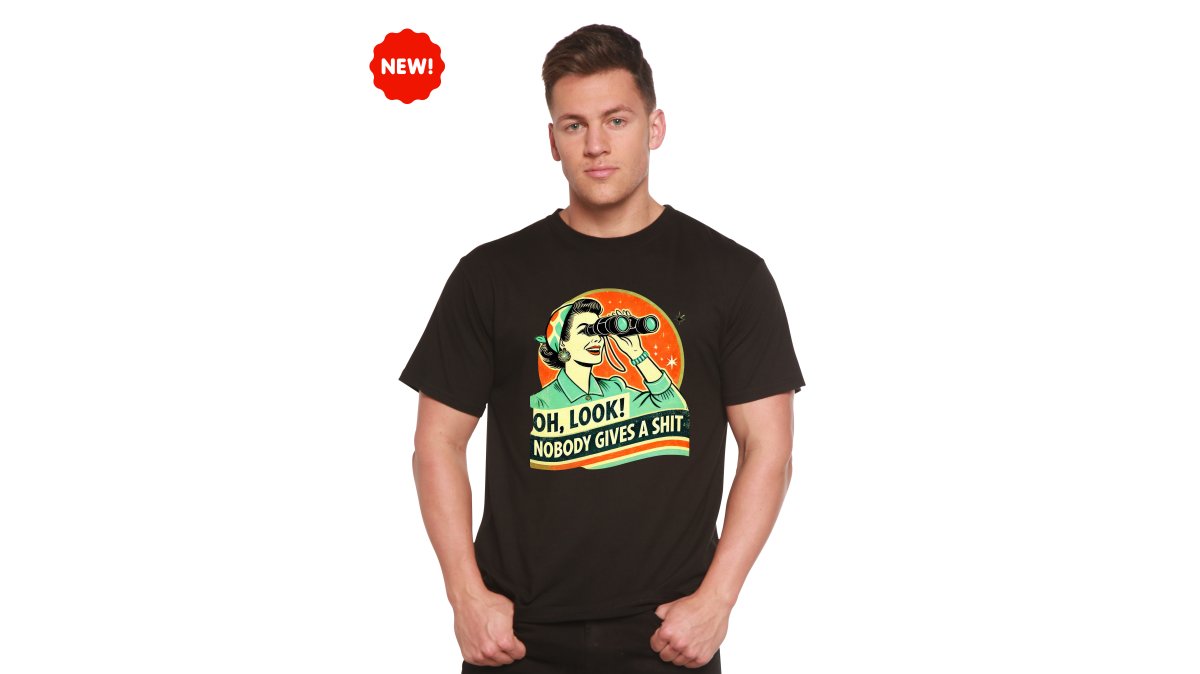
Funny Retro Woman Unisex Bamboo/Cotton Graphic T-Shirt →
- Does it explain its scoring method publicly, including how it weights labor, environment, and animal welfare?
- Does it cite its sources, or does it ask brands to self-report?
- Does it update ratings on a published schedule, or is the data years old?
A directory that answers all five is worth using. One that answers none is a list of logos.
A Practical Decision Process for Different Budgets and Needs
Once a directory gives you a shortlist, match brands to your actual constraints, budget, garment type, sizing, and how often you buy:
- Set a per-garment ceiling. Decide the most you will pay for a single item. This filters out most of the shortlist before you waste time on it.
- Pick the category you actually need. A brand that makes excellent denim may not make a good base layer. Match the brand to the garment, not the other way around.
- Check size range and fit. A brand that only stocks a narrow size run is not accessible to every shopper, regardless of how ethical its supply chain is.
- Confirm availability. Made-to-order and small-batch brands often sell out. If you need the item this month, that matters.
- Run the verification method below on the two or three finalists. Do not skip this step just because a directory already rated them.
For a tight budget, the realistic path is usually secondhand first, then a small number of new pieces from brands that publish factory lists and use certified fibers. For a larger budget, the same logic applies, you are just choosing between more verified options.
Lower-Impact Choices Beyond Buying New
Finding an ethical brand is only one lever. The larger environmental and labor impact of your wardrobe comes from how much you buy and how long you keep it.
- Secondhand and consignment. Buying used extends a garment's life and avoids new production entirely. Resale platforms and local consignment shops are the fastest route.
- Repair and alteration. A tailor can replace a zipper, reinforce a seam, or resize a garment for far less than the cost of a new one. Repair keeps a garment in use and out of a landfill.
- Rental. For occasion wear you will wear once or twice, renting avoids buying a garment you do not need.
These options require no directory at all and often beat buying new from even the most ethical brand. Use them alongside the verification method below, not instead of it.
How to Find Affordable Ethical Clothing Without Compromising Quality
Affordable ethical clothing exists, but it rarely looks like a full wardrobe overhaul. The realistic path is buying fewer, better-made pieces and stretching each one across more wears.
Practical ways to keep costs down:
- Calculate cost per wear instead of sticker price. A $36.74 tee worn twice a week for two years costs pennies per wear; a cheap shirt that pills in three months does not.
- Buy unisex basics that work across outfits rather than trend-driven pieces
- Shop end-of-season and made-to-order drops, which reduce unsold inventory
Cost per wear is the single most useful number in ethical shopping: it reframes a higher upfront price as a lower long-term one and rewards brands that build garments to last.
At NEVERBASIC CLOTHING CO, our graphic tees are priced at $36.74 and built from a 70% viscose-from-bamboo, 30% certified organic cotton blend.
Materials and Construction: What Separates Ethical Clothing Brands From Fast Fashion
Materials and construction are where ethics become physical. A garment made from certified organic fiber in a facility with decent conditions will almost always be sewn better than a disposable alternative.
What to examine:
- Fiber content, listed by percentage, with organic or recycled certification where claimed
- Fabric weight, since heavier jersey resists the thinning and pilling common in cheap knits
- Seam construction, including side seams and reinforced hems that hold shape through washing
A common mistake is judging a garment by feel alone in the store. Our own bamboo and cotton tees use a 7 oz ring-spun jersey with side seams and double-needle hems, construction that survives repeated washing without losing shape.

A Repeatable Method for Evaluating Any Brand
Here is the method we would run on any brand, including our own. Score each line from 1 to 5, then total it: under 15 is a pass, 15 to 20 is worth a second look, above 20 is a strong signal.
- Supply chain disclosure (1-5): Does the brand name its factories or suppliers?
- Material transparency (1-5): Are fiber contents and certifications listed by percentage?
- Certification (1-5): Are claims backed by verifiable, third-party seals?
Run this before you buy, not after. It takes about ten minutes and filters out most brands that talk about ethics without doing the work.
Conclusion
The hard part of ethical shopping is not finding brands that claim good values but the few that prove them, and that takes a method rather than a mood. Start with supply chain disclosure, verify certifications against their databases, and score every brand the same way.
That standard is the one we hold ourselves to at NEVERBASIC CLOTHING CO. Our graphic tees are printed to order, built from a bamboo and organic cotton blend, and constructed with side seams and double-needle hems so they hold up wash after wash instead of pilling in a season.
Frequently Asked Questions
What clothing brands are actually ethical?
There's no single list that covers every brand, but you can identify ethical clothing brands by checking three things: whether they publish their factory list, whether they hold third-party certifications like Fair Trade Certified or GOTS, and whether their materials are organic, recycled, or low-impact. Brands that share supply-chain details openly and back up claims with accredited certifications are far more credible than those relying on vague language like 'eco-friendly' or 'sustainable.'
How can I tell if a clothing brand is ethical?
Start by looking for supply-chain transparency on the brand's website. Can you see where garments are made and who makes them? Next, check for certifications from recognized bodies. Then look at materials: organic cotton, recycled fibers, and bamboo viscose are stronger signals than generic 'natural' claims. Finally, see if the brand publishes any social or environmental reports. If a brand can't answer basic questions about its factories or fabric sourcing, treat its ethical claims with caution.
What certifications should I look for in ethical clothing?
The most useful certifications include Fair Trade Certified (verifies fair wages and safe conditions), GOTS (Global Organic Textile Standard, covering organic fiber and processing), OEKO-TEX Standard 100 (tests for harmful substances), and B Corp certification (measures overall social and environmental performance). Each covers a different part of the supply chain, so a brand with multiple certifications is generally more accountable than one with none. Be wary of self-created badges that no independent body verifies.
How can I shop ethically on a budget?
Affordable ethical clothing exists if you know where to look. Focus on cost per wear rather than sticker price: a $36 t-shirt that lasts three years costs less per wear than a $12 shirt that pills after five washes. Shop secondhand or thrift first, look for end-of-season sales from brands you've already vetted, and prioritize versatile pieces you'll wear weekly. Made-to-order and print-to-order models also reduce waste, which often keeps pricing reasonable.
Is it possible to verify a brand's sustainability claims?
Yes, but it takes some digging. Cross-reference a brand's claims against certification databases like the Fair Trade Certified or GOTS directories. Check whether the brand publishes a factory list and whether that list matches what third-party auditors report. Look for specific numbers (water saved, carbon reduced) rather than vague statements. If a brand claims to be '100% sustainable' without any certification or published data, that's a sign the claim is marketing rather than measurable progress.
What does ethical clothing mean?
Ethical clothing means garments made with respect for the people who produce them and the environment they're made in. That covers fair wages, safe working conditions, and no child labor on the social side, plus reduced water use, lower carbon emissions, and responsible material sourcing on the environmental side. It also includes durability: clothing designed to last longer and be worn more reduces the overall impact of your wardrobe.